
About me
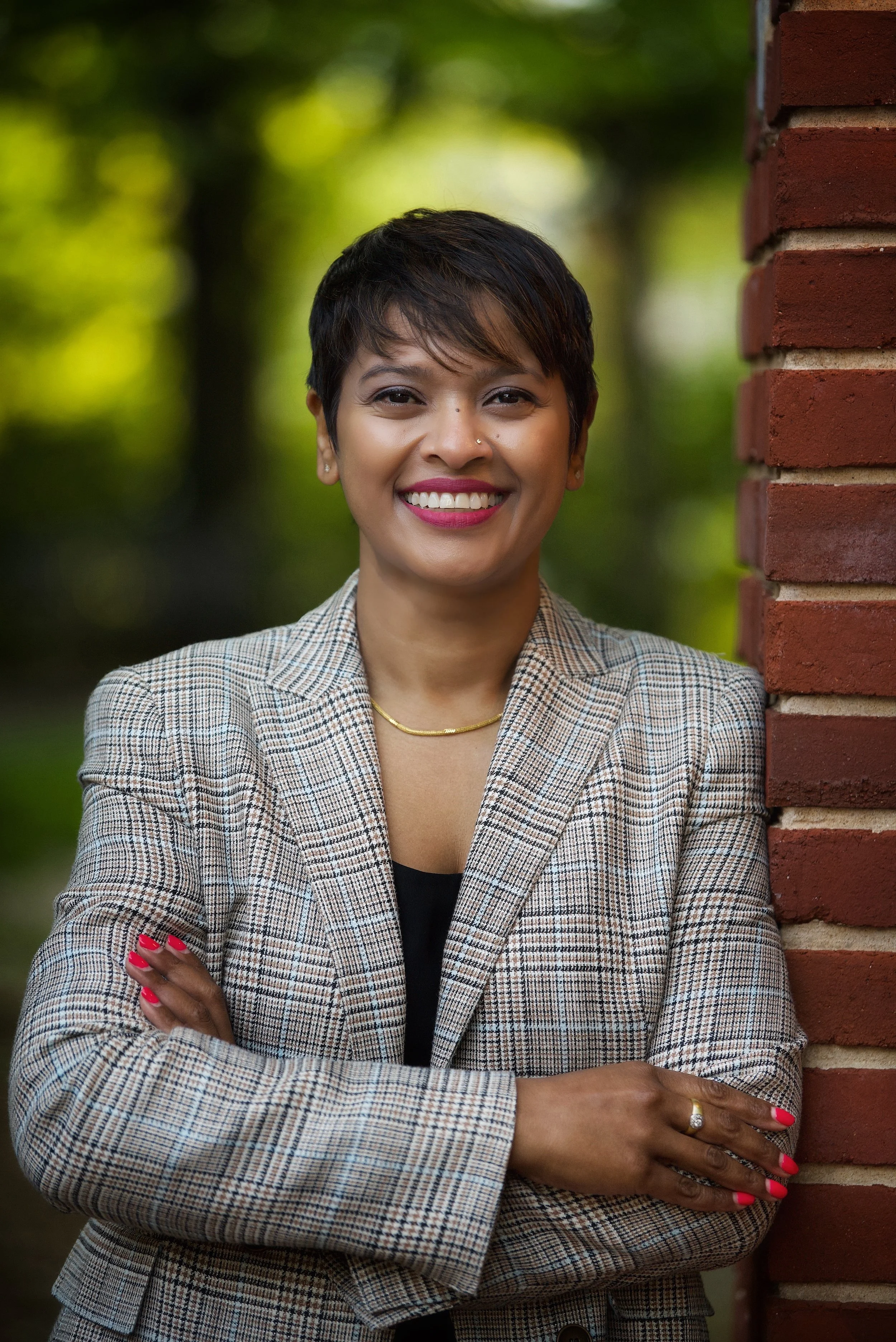
My career spans more than two decades across South Africa and the United States, across government, litigation, and senior in-house leadership roles that most people treat as separate disciplines.
I began as a law lecturer at the University of Natal and later became a Public Prosecutor. My subsequent government roles included leading legislative teams at the National Department of Trade and Industry in drafting major competition and corporate law reforms, working directly with Parliament, Cabinet, and international organizations including UNCTAD and the WTO. That work required understanding how institutional authority is structured, how it holds, and what causes it to break down.
In the United States, I practiced complex commercial litigation at Willkie Farr & Gallagher and Kasowitz Benson Torres in New York. Costly litigation is often the last symptom of organizational incoherence. I then moved in-house, where my understanding of organizational coherence became deeper and more operational.
At Eastman Chemical, I served first as Senior Counsel and Regional Counsel for Latin America, then as Director of Global Business Conduct. In that role, I led the strategic redesign of the company’s ethics and compliance program. That meant building the company’s first global compliance risk assessment, overhauling investigation protocols and reporting infrastructure, and launching a psychological safety initiative to change how the organization surfaced problems. I was also directly involved in crisis management following a major operational disruption, work recognized with the Chairman’s Award. These were not advisory roles. They were organizational leadership roles with direct accountability for how institutional systems functioned.
At Crowe LLP, a multi-state firm with more than a billion dollars in revenue, I built and led the firm’s inaugural Talent Risk and Relations organization. That included standing up the firm’s first independent investigations capability, designing its HR compliance framework, and embedding risk assessment into daily people operations.
What this arc has built is a particular kind of diagnostic capacity. I’ve operated within the structures I now help organizations examine, not as an observer, but as someone directly accountable for whether they held. I know what decision-making looks like when authority is genuinely unclear. I know what it costs when accountability mechanisms are formal but not real. And I know what it takes to build institutional systems that function under pressure rather than on paper.
I’ve built my career in organizations that gave me an early education in the cost of structural incoherence. In government, in high stakes litigation, and across senior in-house roles at global corporations, I didn’t just observe how institutions fracture, I was directly involved in building the systems meant to hold them together. The pattern I saw over time was consistent: institutions erode not because their people lack talent or their strategies lack ambition, but because their operating foundations simply don’t hold in the longer term. Leadership behavior drifts from institutional expectations. Accountability becomes selective. Trust is built heroically instead of systematically.
The quality of the society we’re building is directly proportional to the quality of the institutions we build and lead. This is why I started doing this work.
The experience behind the work
Credentials
Shalini holds an LLM from Northwestern University with a Certificate in Business Administration from the Kellogg School of Management, as well as an LLM, LLB, and B.Soc.Sc. from the University of Natal. She is admitted to the bar of New York.